Designing with light
"Architecture is the masterly, correct and magnificent play of volumes brought together under light." An aphorism by the Swiss architect with which many have sought to summarise more than half a century of work.
And we already know that architecture is much more complex. A project is always intertwined with social, economic and aesthetic aspects that cannot reduce architecture to a simple concept, but it is true that light plays a decisive role in the "atmosphere of spaces." Exteriors and interiors.
This is what makes the lighting project so important in the design of spaces. Baltasar Patiño already said that "light can build or destroy a space." Or hasn't it happened to you to enter a restaurant where you feel the atmosphere envelops you, shelters you, and after sitting for a while you realise that the space has no special material or morphology? It is owed to nothing more and nothing less than the lighting design.
—————
Designing with natural light.
Let it be said first that, under the umbrella of passive architecture, we are told to make the most of natural resources. Therefore, in our projects, the main objective will always be to minimise the use of artificial lighting.
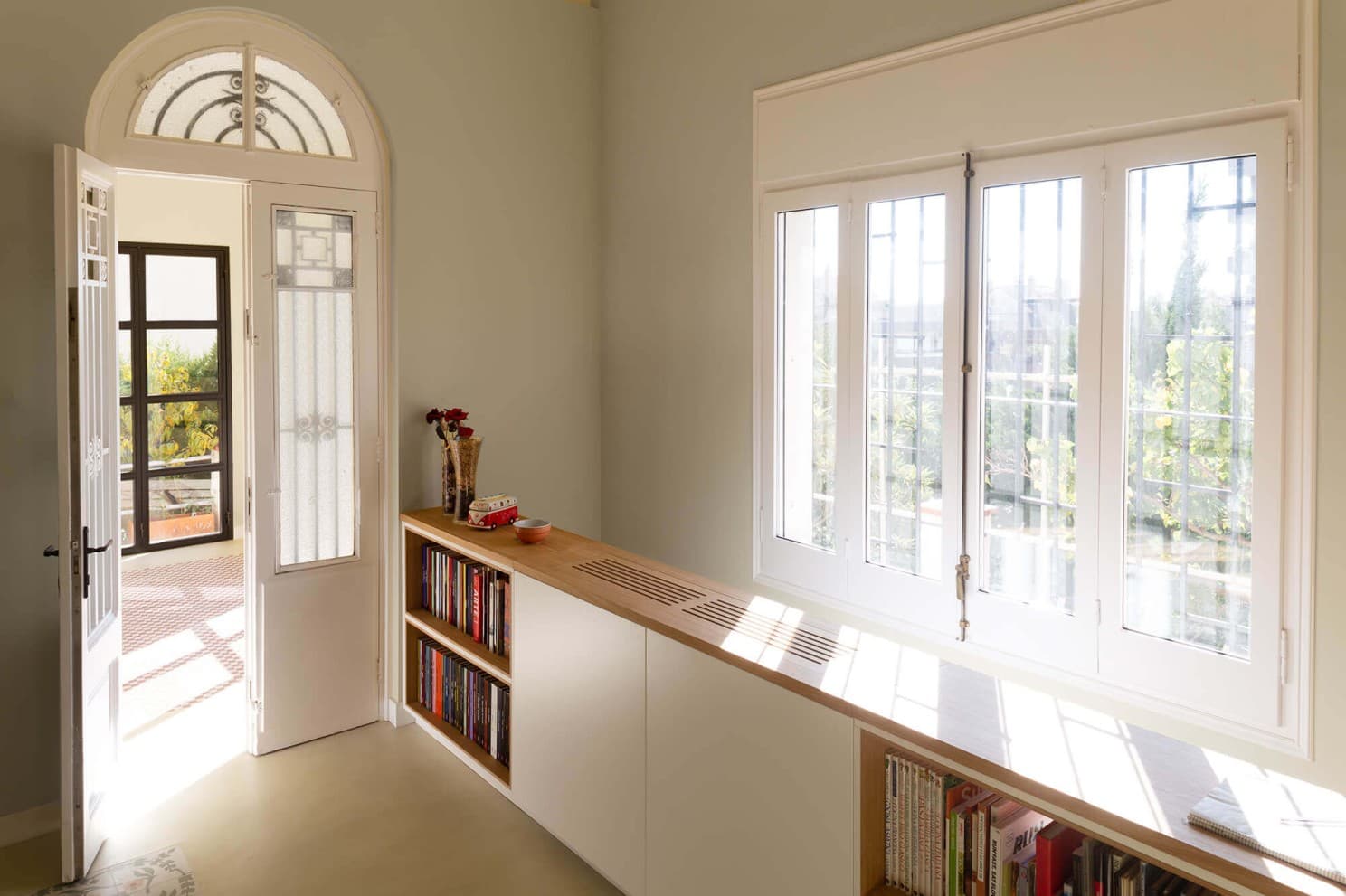
Villa Luisa Project.
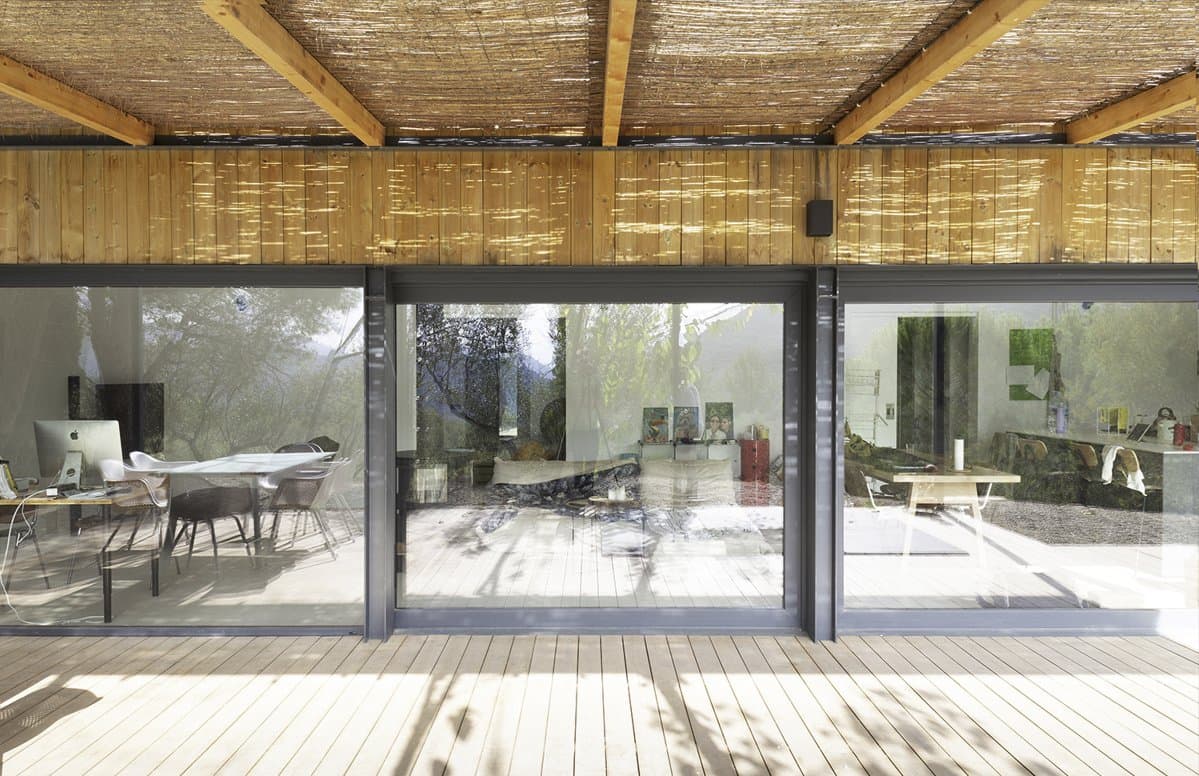
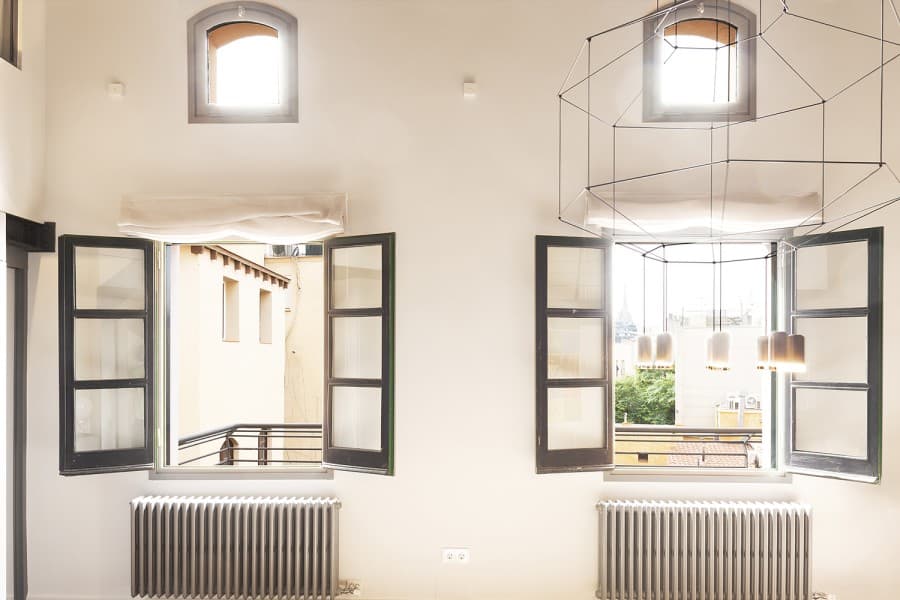
However, we must bear in mind that when "designing" from natural daylight, it can sometimes be difficult to control high solar radiation, so we must be very aware of what tools we have to filter it, in order to avoid direct radiation.
Alforja Project.
Nor can we forget the impact of orientation. North light is usually the most suitable for work spaces, as it does not generate as much chiaroscuro or shadows, being much more constant throughout the day and without direct radiation.
But however much we minimise the use of artificial light, we cannot live without it. There are spaces that do not have good natural light, and we also have the nights: black and dark. So it is essential to know how to handle the design of artificial light, to give rooms the comfort we ask of them.
—————
Designing with artificial light.
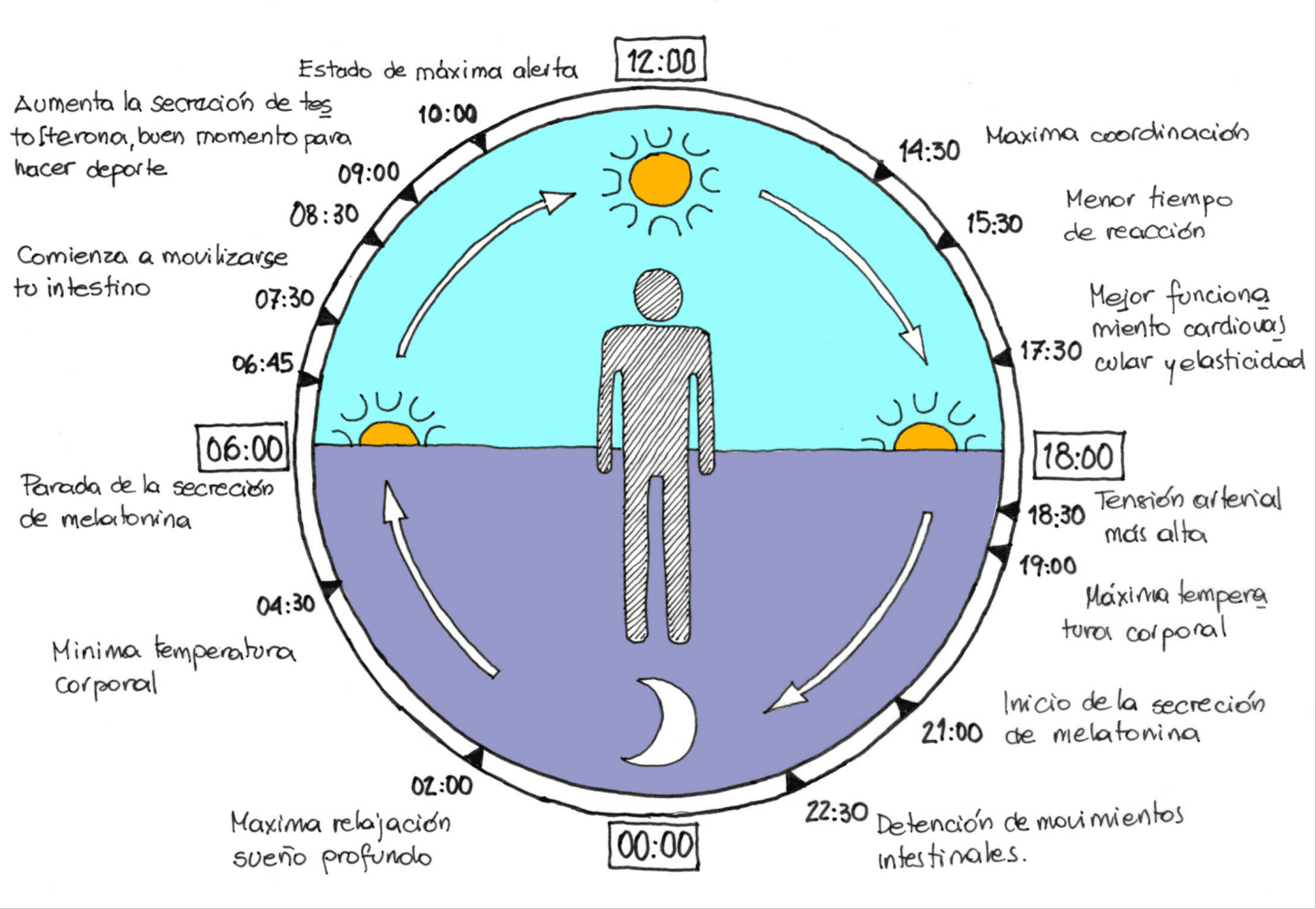
Even if we don't know what time it is, or have any temporal references about day and night, our body innately marks a rhythm of approximately 24 hours. And it does so thanks to the circadian cycles.
Circadian Rhythms sketch.
In other words, we have something like an internal clock that synchronises our metabolism, intestinal mobility, hormonal rhythms (melatonin, cortisol, etc.), where the brain is the conductor of the orchestra.
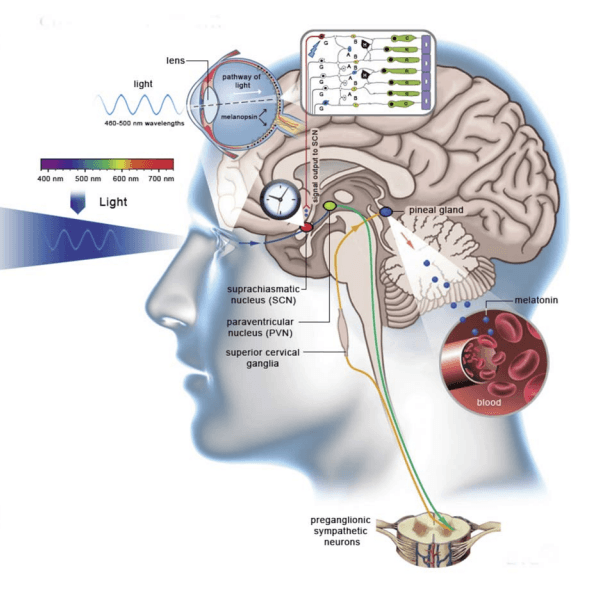
And one of the external stimuli that most influences the synchronisation of the central clock (hypothalamus) is light.
Nervous system influenced by light.
We could talk at length about biological processes, but for the lighting project of a space, the most important thing is to know that to the extent that we design in alignment with natural light, we will help prevent imbalances in the body caused by the desynchronisation between our biology and the 24-hour environmental cycles.
So, to get to the heart of the matter, we have summarized in a few points some of the most important criteria when designing with lighting.
1. Adapt the light spectra according to the time of day (whenever the activity allows it).
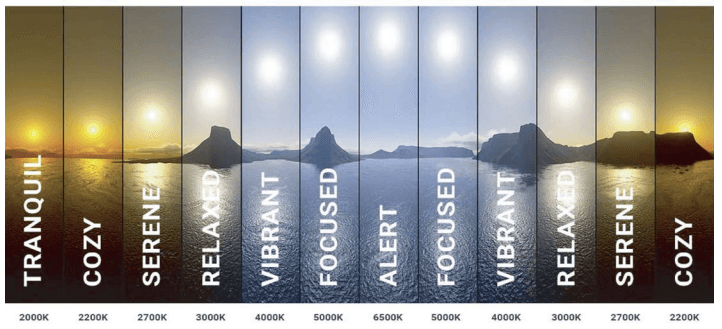
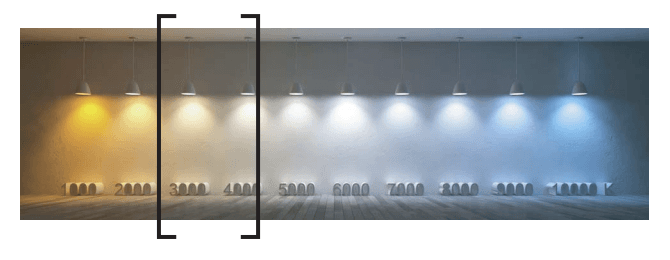
Luminaires are characterized, in addition to their amount of light and dimming capacity, by their apparent color, that is, the color temperature, which is classified as warm, medium and cool. Warm colors tend to be more welcoming. However, care must be taken that they are not so warm that they reduce color rendering.
For rooms where we want to invite relaxation, we should use warm lighting (between 2,700ºK and 3,000ºK temperature), so as not to activate our metabolism.
In those rooms where we wake up and sleep it is important to have the option of turning on a single very warm light (1,000ºK / 1,500ºK), one that invites us to relax and does not alter our system if we get up in the middle of the night.
2. Control exposure to cool light.
Although cool light increases productivity, its permanent use causes damage to ocular tissues and inhibits melatonin production, causing drowsiness, stress and fatigue, so it is important to restrict its use in workspaces where concentration is required. Cool light is used in high-performance and precision spaces: operating rooms, offices, but we must control its use in domestic spaces.
3. Generate contrast, zoning according to uses.
Homogeneous lighting in a large, open space generates visual fatigue and does not allow the eyes to rest. So it is highly advisable to design different types of lighting for the different uses.
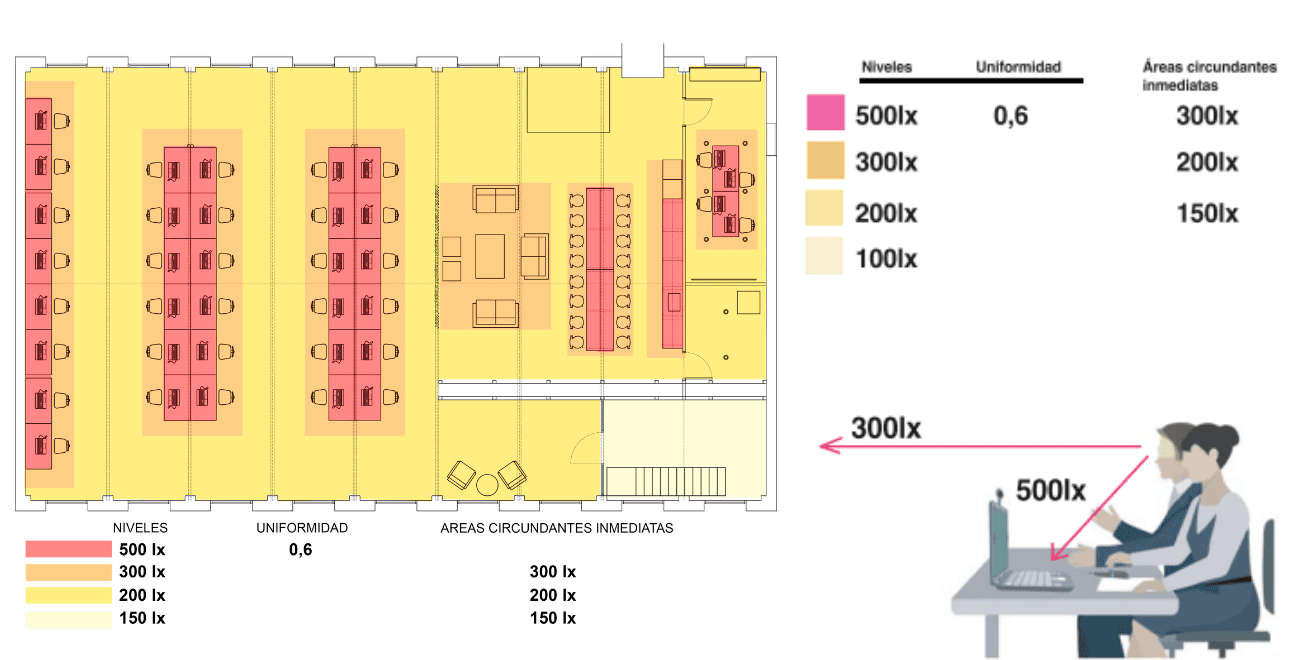
Thus, for example, in a workspace (such as the kitchen, an office, a workshop) it will be important to achieve a differentiation of zones through light:
a) Higher intensity light for the work area (countertop or desk),
b) Lower intensity light for passage areas,
c) Medium light for storage areas.
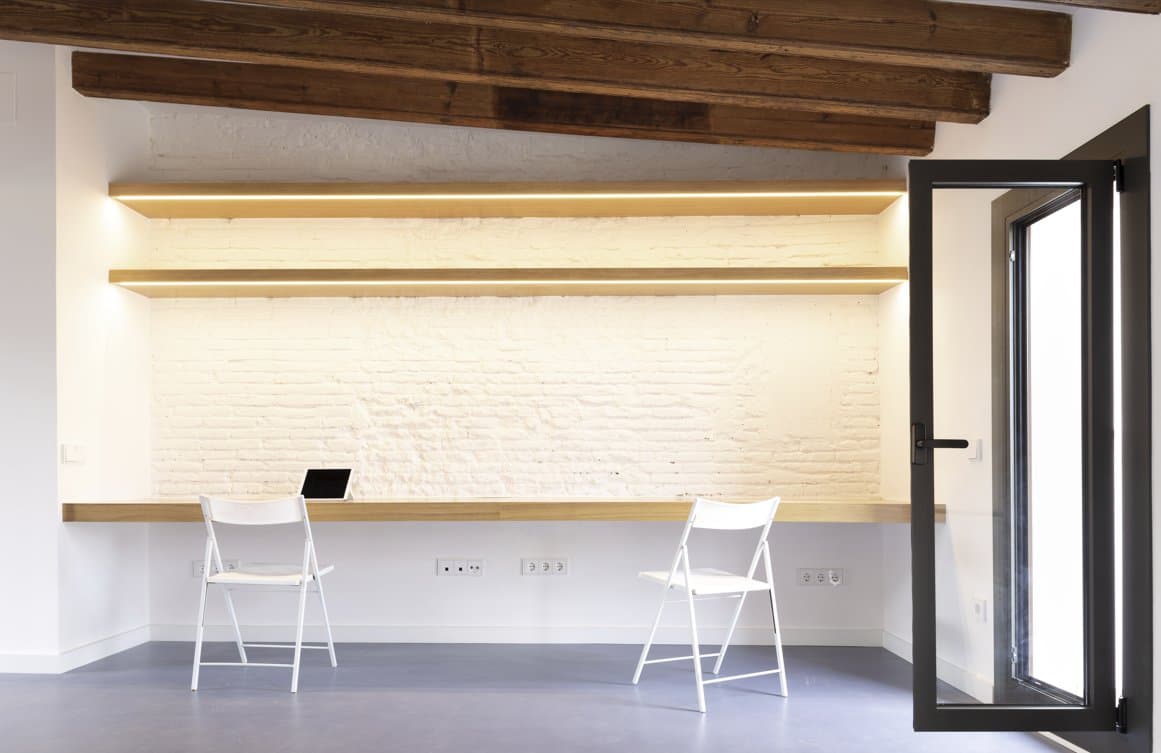
Office project: “Stupendastic”.
Entre terrazas y cúpulas project. Direct light over the desk.
The effect achieved with dichroic lights recessed in a false ceiling is much more homogeneous than that obtained with luminaires placed at other heights. The different beam angles of the bulbs also create different scenarios. These resources (among others) help to generate contrasts, in order to avoid exhausting homogeneous lighting.
4. Combine direct and indirect lighting.
In almost all the environments of a home, we need intense light for precise actions (eating, knitting, cooking, studying, reading, putting on makeup, shaving) and a weaker light to accompany more relaxed actions (listening to music, lingering at the table after a meal, moving around, getting up at night to soothe a baby). A lighting project must take into account the different verbs, in order to meet the needs of each moment. Providing sufficient, quality light for actions that require precision and concentration, and calm, relaxed light to accompany actions where we do not want to activate our metabolism (but rather the opposite).
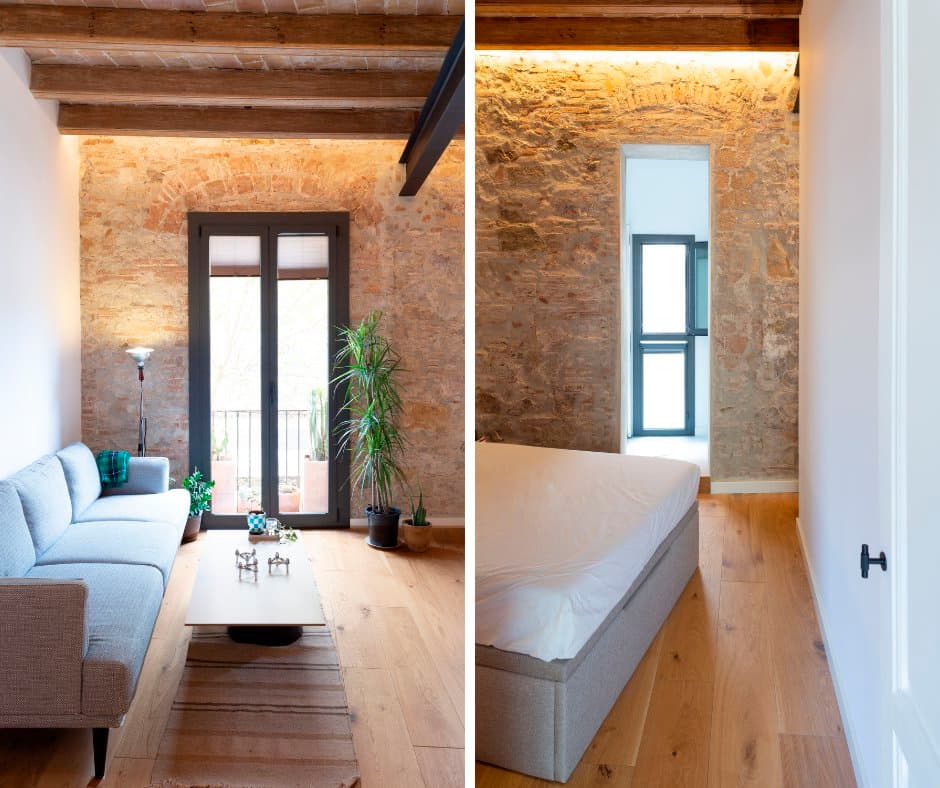
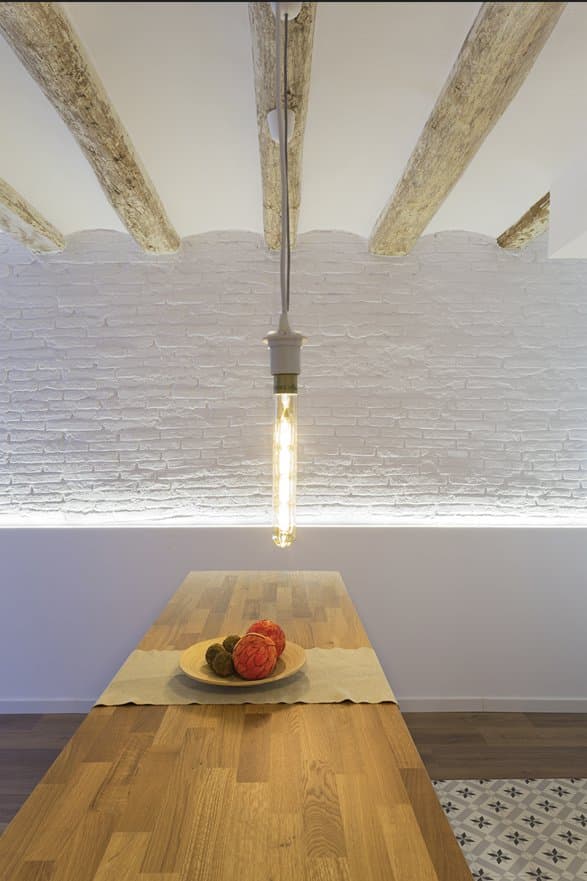
Casa Hache project. Direct light over the kitchen table. Indirect light behind the cladding, illuminating an exposed brick wall.
5. Provide the possibility of dimming the lighting.
Another resource for dimming intensity is using dimmers, which are electronic devices that allow you to regulate intensity or voltage.
In this way, our light point will have a variable intensity, which will help us achieve the desired lighting atmosphere at any moment, with the consequent energy savings when we set the bulb to low light.
6. The color rendering index.
To finish this little guide, let's move on to a somewhat more technical concept: the CRI, or color rendering index.
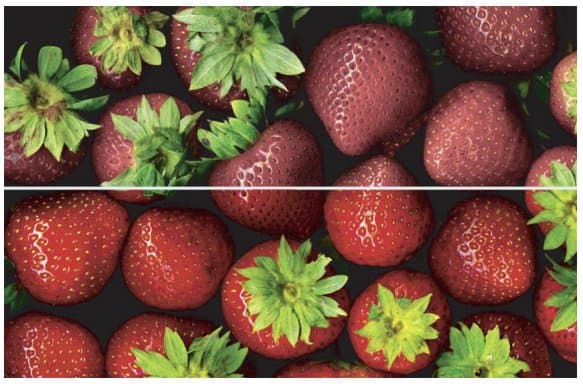
It is the characteristic of a bulb that allows it to show, with greater or lesser fidelity, the values (colors) of an object, taking natural light as a reference. Regulations require a minimum CRI of 80, but this value is not recommended for areas where we spend many hours straining our eyes.
As a reference, a fluorescent light has a CRI of 60. And on the market there are many cheap bulbs with a CRI below 80.
The perception of color according to the CRI index of the bulb.
Some conclusions.
Maximum use of natural light
Artificial light as reinforcement, replicating daylight: it changes constantly, in its intensity, its duration, its angle, its radiation, its spectral distribution.
Neutral whites (3,000K) as a base for most spaces
Enhance indirect lighting
Dimmable lighting to lower the intensity at night.
Good lighting concerns our visual health, and depends as much on the characteristics of the products as on the design strategies of the lighting project.